
THE WAVE FUNCTION PROJECT: A Place to Belong
For most children, when the last day of school is over, they leave knowing that their summer days will be filled with camps, activities and new experiences.
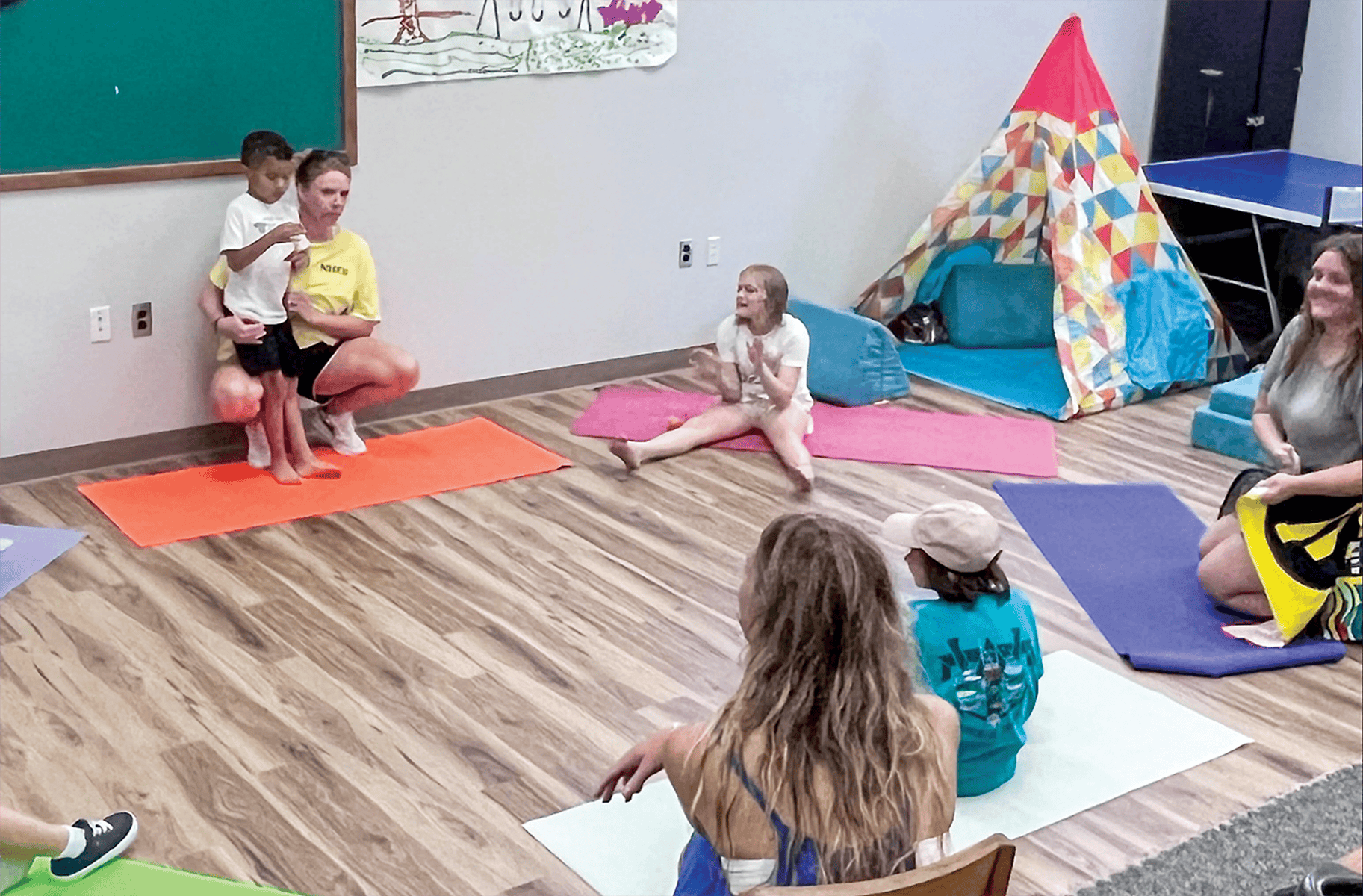
By Ann Wood / Photos by Lauren Bradshaw & Alex Cohill / Photo above: A guided yoga lesson, provided to Wave Camp campers.
For some families, however, it can feel much different.
Children with disabilities, particularly those with significant physical, developmental or communication needs, often have few options when school lets out. Traditional summer camps may welcome them, but they aren’t always staffed or equipped to provide the support some children need to fully participate.
Alex Cohill had heard the question from parents many times: What is there for my child to do this summer? Too often, he didn’t have a good answer.
Cohill is an Extended Content teacher at Nags Head Elementary School, where he works with students with severe and profound disabilities. He has spent 11 years with the school, including seven in his current role. His colleague Lauren Bradshaw is a Special Education teacher, also at Nags Head Elementary School, working with students with a wide range of learning and behavioral needs.
The two had talked frequently about ways to support their students beyond the classroom, and particularly during summer.
“We live in such a small community where a lot of our resources are limited in general,” Bradshaw says. While new therapeutic resources have begun filling some gaps, opportunities outside of school remain limited, particularly compared with larger communities.
Cohill decided it was time to create one.

Two campers explore nearby Turtle Pond, one of several community excursions campers enjoyed during the program’s inaugural summer.
A Camp Built Around Fun
That idea became the Wave Function Project, a nonprofit organization that launched its first Wave Camp this summer.
The distinction between camp and school was important from the beginning. Some children with disabilities qualify for extended school year services, but those programs are focused on educational goals. Cohill wanted something different: “a real camp experience.”
That meant crafts. Games. Basketball. Playground trips. Making snacks. Visits to the turtle pond and library. Walks to nearby attractions. Time with friends. Most importantly, it meant adapting those activities so everyone could participate. “Some of our students were in wheelchairs, some, you know, not as capable, so we would try to adapt a game so everybody could play,” Bradshaw says.
The inaugural program ran four weeks during July at the Dare County Youth Center in Kill Devil Hills. Camp was held Monday through Thursday from 9 a.m. to 2 p.m., with approximately six to seven campers each week. The weeks were divided by age, serving children and young adults from elementary age through 22.
Joining Cohill and Bradshaw was Kristen Liverman, an Occupational Therapy Assistant with Dare County Schools who works with children across multiple schools. Suzanne Loving serves as the nonprofit’s treasurer. Together, the team brought different areas of experience to a program that had no established blueprint.
“We kind of just sat down and used our expertise together,” Bradshaw says. “We really wanted to focus on fun” and find activities that could be adapted so everyone could be included.
For Campers and Their Families
For the campers, Wave Camp offers something their peers can easily take for granted: a place where the program is designed with them in mind.
For their families, its impact extends even further. “When the school year ends,” Cohill says, “families can suddenly find themselves without the structure and support school provides. Parents who are already balancing work, family and the care of a child with significant disabilities can face a summer with very few alternatives.”
“It’s for their families too,” Cohill says.

Campers in the gym playing “Duck, Duck, Goose”.
Wave Camp gives parents an option where they know their children will be cared for, engaged and having fun. Cohill describes it as providing “a little bit of respite” for families while giving campers something that should be an ordinary part of childhood: a summer experience of their own.
Bradshaw sees the difference particularly clearly when comparing their students’ summers with those of their peers.
“Your typical kids, they’re getting invited to camps at the YMCA or they can sign up for whatever other camps that are offered in the area,” she says. Children with greater needs may not always be able to successfully participate in those programs.
“So we really wanted to create a place where they could go and just have fun.”
Building What Comes Next
Hosting four weeks of camp this year was the beginning, not the destination.
The original goal was to host five weeks, but funding allowed for four, something Cohill now sees as a blessing in disguise. It gave the team an opportunity to learn, adjust and build the program thoughtfully during its first summer.
Next summer, they hope to offer more weeks and welcome more campers. Bradshaw envisions eventually running programs for different age groups simultaneously and, as resources allow, potentially expanding their explorations.
Cohill also wants to add more community excursions. Transportation and insurance costs limited those opportunities this year, so campers explored places they could reach on foot from the Youth Center. Offers of transportation assistance from local churches and community organizations could open more doors next summer.

Camp students at Three Tequilas, engaged in an exercise to practice ordering at a restaurant.
But Cohill’s vision reaches well beyond summer camp. He imagines after-school or evening programming and partnerships with local businesses that could help older participants develop skills and eventually find meaningful employment. One day, he would even like to see programming for adults with disabilities and perhaps a restaurant specifically designed to employ them. They are big ideas, and Cohill knows they will take time. “I have to stay open to meeting the camp where it is,” he says.
For now, where it is looks promising. Cohill describes the project as a “labor of love,” one that came together quickly through the efforts of educators, families, businesses and community members willing to believe in an idea that had never been tried here before. Again and again, he says, doors seemed to open just when they needed them to.
To him, that is a sign they are on the right path.
The first summer of Wave Camp was small by design: a few dozen campers, four weeks and a handful of educators determined to create something that had been missing. But for the children who finally had a summer camp built with them in mind, it was something much bigger. It was a place to play, connect, explore and have fun.
Most of all, it was a place where they belonged.
How you Can Help!
The Wave Function Project is a nonprofit organization, and community support makes Wave Camp possible. Donations help the organization serve more campers, add additional weeks, expand activities and community excursions, and work toward future year-round programming.
Donate
Contributions can be made directly through the Wave Function Project website.
Partner
Local businesses and organizations can support the program through donations, sponsorships or fundraising partnerships.
Spread the Word
Help connect Wave Camp with families who could benefit from the program, and with individuals and organizations that can help it grow.
Share an Idea
Have access to a resource that could help? An idea for a fundraiser? A business interested in getting involved? The Wave Function Project team welcomes community partnerships and new ideas.
Learn more or donate: wavefunctionproject.org