
Rooted in Place
On the Outer Banks, the best curb appeal starts with landscaping designed to thrive where sand, salt, wind and summer heat are part of the equation.
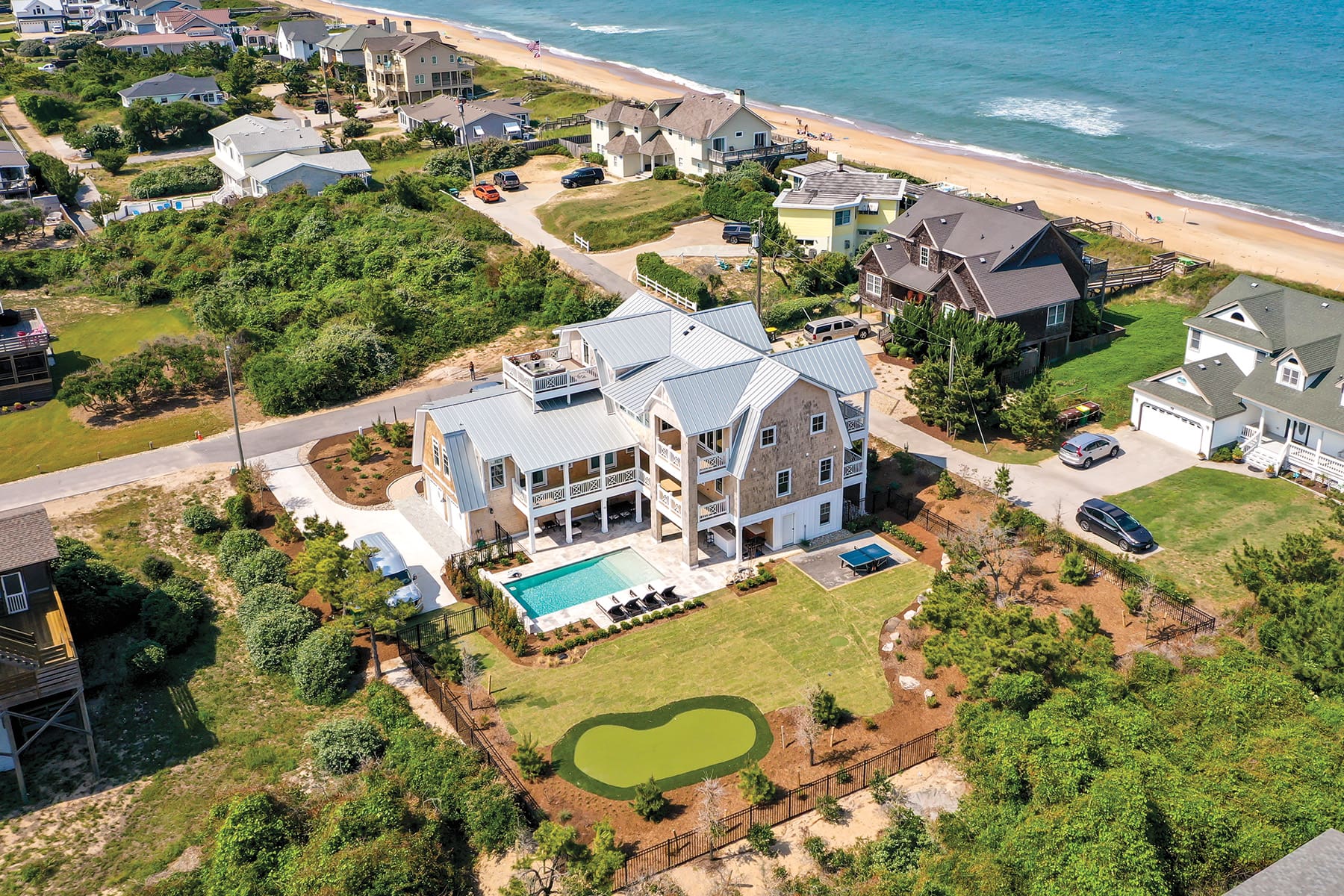
By Ann Wood / Photo above courtesy of Carolina Designs Realty
A freshly mulched bed. Ornamental grasses moving in the breeze. A little color near the front steps.

Landscaping can change the way we see a house before we ever walk through the door. For a homeowner, it makes a property more inviting. For a vacation rental, it helps set expectations for the stay ahead. And when a home goes on the market, it becomes part of that all-important first impression.
On the Outer Banks, though, achieving that look requires a little more thought.
“We’re working with sand,” says Jim Gallagher, horticulturist with Grounds Pros and a certified plant professional who has worked in landscaping on the Outer Banks for 30 years. “There’s no water retention in our native ecosystems along the beach.”
Add salt spray, wind, intense summer heat and, in some neighborhoods, hungry deer, and landscaping here becomes less about choosing what looks good at the garden center and more about choosing what will actually thrive once it gets home.
Start With the Location
Gallagher’s first rule is simple: landscaping should be site-specific.
“There’s not a magic list that will work for everyone,” he says.
A home along the Beach Road can have very different growing conditions from one tucked beneath live oaks in Southern Shores. Even moving from the oceanfront to a more protected location can dramatically expand the plants a homeowner can successfully grow.
Jason Jernigan, manager of the Powells Point location of Bennett’s Creek Wholesale Nursery, says one of the first questions he asks is where the property sits in relation to the water.
Ocean and sound spray can determine what survives. Salt-sensitive vegetation can literally burn from exposure, he says, making salt tolerance particularly important for oceanfront properties.
That doesn’t mean coastal landscaping has to be sparse. Ornamental grasses offer plenty of variety in color, foliage and growth patterns, according to Gallagher. Roses, yuccas and other plants suited to hot, dry conditions can also work well in the right locations.
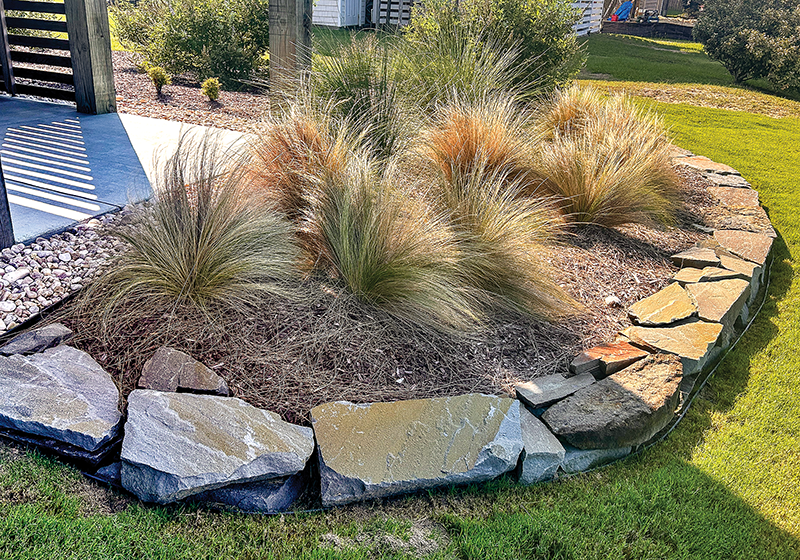
Image courtesy of Grounds Pros Landscape Management
Jernigan points to junipers, hollies, drift roses and other hardy choices, while noting that properties in areas with significant deer populations have another consideration—choosing plants that aren’t as likely to be dinner for the deer.
For owners of pet-friendly vacation homes, there is one more item to add to the checklist. Some plants, like the popular Oleander, that tolerate the conditions well can be toxic to animals. Jernigan recommends researching toxicity before planting where pets, or young children, will have easy access.
Give Plants a Fighting Chance
Choosing the right plant is only half the equation.
Outer Banks sand drains quickly, taking water and nutrients with it. Jernigan recommends adding other materials to planting beds, like potting soil or bed enhancer, so they retain both water and nutrients longer, particularly when installing new landscaping.
Mulch serves a similar purpose.
“The sand moves so much water through it. It gets so hot that we’ve got to supplement the water, but then we’ve also got to try to keep some of it in the ground,” Gallagher says.
For landscaping intended to have lasting value, he recommends some form of irrigation, whether drip irrigation or a more traditional system.
“The objective isn’t necessarily to recreate a lush inland landscape at the beach,” he says. “It’s to give well-chosen plants what they need to succeed in an environment that can otherwise be unforgiving.”
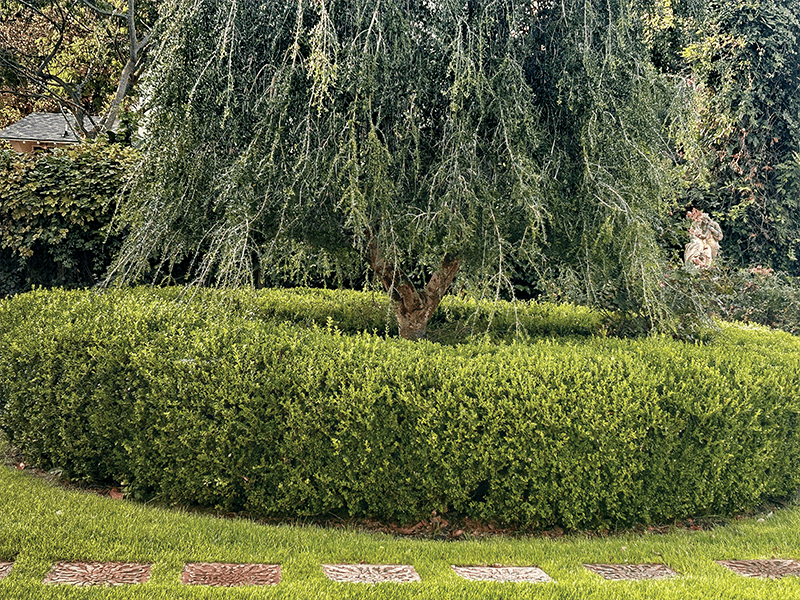
Image courtesy of Grounds Pros Landscape Management
First Impressions Count
A landscape that works well in its environment can also work for the property itself.
For Randy Nance, Senior Real Estate Broker at Coastal Carolina Vacations and Sales, landscaping is as much a part of preparing a home for market as painting, staging or replacing worn furniture might be. It is the cumulative effect that matters. While each may seem like relatively small pieces, together they shape a buyer’s perception of the home.
“It’s super important, regardless of the price range of the house, because it’s the first impression a potential buyer is going to get when they pull up,” Nance says.
And making that impression doesn’t necessarily require a major investment. Nance often advises sellers to start with the basics: trim overgrown hedges, put down fresh mulch, clean up debris and make the exterior look well maintained.
“Those relatively inexpensive improvements can have an immediate effect on how a home presents in listing photos, at showings and when a prospective buyer first pulls into the driveway,” says Nance.
The opposite can happen, too.
When a buyer arrives at a property where the exterior looks neglected, Nance says it can raise a larger question, “I wonder what else that I can’t see is not being taken care of?”
In other words, curb appeal isn’t simply about making a house prettier. It can help communicate that the property itself has been cared for.
Curb Appeal for Vacation Rentals
Vacation rental guests are forming their own impressions, and often long before they pull into the driveway.
Online photos are a big part of the decision to book a vacation rental. Landscaping plays a role in making a home look inviting to prospective guests. In addition, landscaping also becomes part of the guest experience once they arrive.
Rental managers at Carolina Designs Realty know that attractive curb appeal can contribute to rental performance, while poorly maintained outdoor areas can lead to a bad first impression. Pool areas are particularly important, and according to the rental management team at Carolina Designs, can be responsible for complaints on guest surveys.
Annual flowers and other high-maintenance choices may look beautiful when they’re first installed, but Carolina Designs generally discourages landscaping that requires constant attention or isn’t naturally suited to the coastal environment. Their advice to owners is to think in terms of long-lasting curb appeal rather than how a property looks for the first few weeks after planting.
Their recommendation is to keep landscaping relatively simple, use plants suited to the location, and establish a regular maintenance schedule so guests arriving throughout the season have a consistently attractive outdoor experience.
A tip they offer to oceanfront homeowners: native beach grasses can also help stabilize and protect dunes.
Dan Hardy, General Manager and President of Joe Lamb Jr. & Associates, has also seen landscaping become a bigger part of the vacation rental equation, particularly as homes become more upscale.
For owners who prefer the natural Outer Banks look, that doesn’t mean leaving the property entirely to its own devices. Hardy recommends maintaining areas along the driveway and house perimeter as well as around the pool.
“An exterior that appears unkempt,” he says, “can give prospective guests the impression that the home itself may not be well maintained. First impressions are important, and nice curb appeal of the home can boost rentals.”
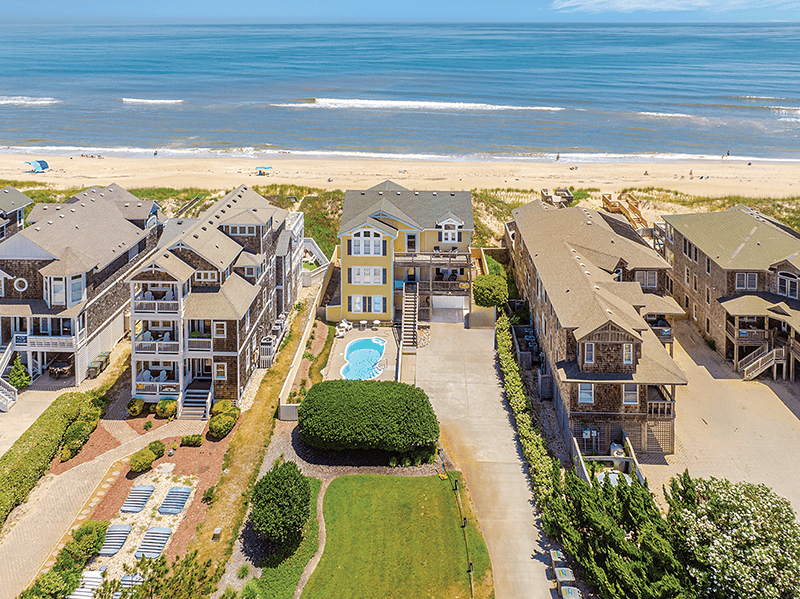
Image courtesy of Joe Lamb, Jr. & Associates
Hardy says manicured lawns are increasingly common at higher-end properties, and nicely landscaped homes tend to perform better. Adding sod around pools and inside fenced areas can make those outdoor spaces more appealing to guests, although homeowners have to weigh that benefit against the added cost of irrigation and regular maintenance.
That makes consistency particularly important for vacation rentals. Unlike a primary residence, where a homeowner can head outside and trim something that has gotten unruly, rental properties have to schedule their maintenance with the vacationers in mind.
Hardy notes that lawns may require mowing weekly during the rental season depending on the property. When possible, he prefers service around private pools to take place on turnover day to minimize disruption for guests.
The goal for a vacation rental isn’t necessarily more landscaping. It’s ensuring the landscaping that you choose can hold up to the demands of the season.
A Landscape That Works
Whether a home is a year-round residence, a vacation rental or being prepared for sale, the most successful Outer Banks landscapes have something in common: they work with the property rather than against it.
That may mean a manicured lawn and carefully maintained pool area at one home, ornamental grasses and hardy shrubs at another, or simply fresh mulch, trimmed vegetation and a natural landscape that looks intentional and cared for. The goal isn’t necessarily to have the most landscaping on the block. It’s to make choices that suit the home’s location, its use and the realities of maintaining it.
For a seller, that care can shape a buyer’s first impression. For a vacation rental owner, it can make the property more inviting in photos and create a better experience for guests. And for anyone who simply calls the Outer Banks home, choosing plants that can handle the environment means less time fighting the elements and more time enjoying what grows.
It all comes back to Gallagher’s advice to find “the right plant for the right place.” On the Outer Banks, getting that part right can create a landscape that doesn’t just look good when it’s planted, but continues to complement the home season after season.