
Dare County’s Early College Takes Shape
A new kind of high school is taking shape in Dare County—one built to combine the structure of high school with the opportunity of college in a more personalized setting.
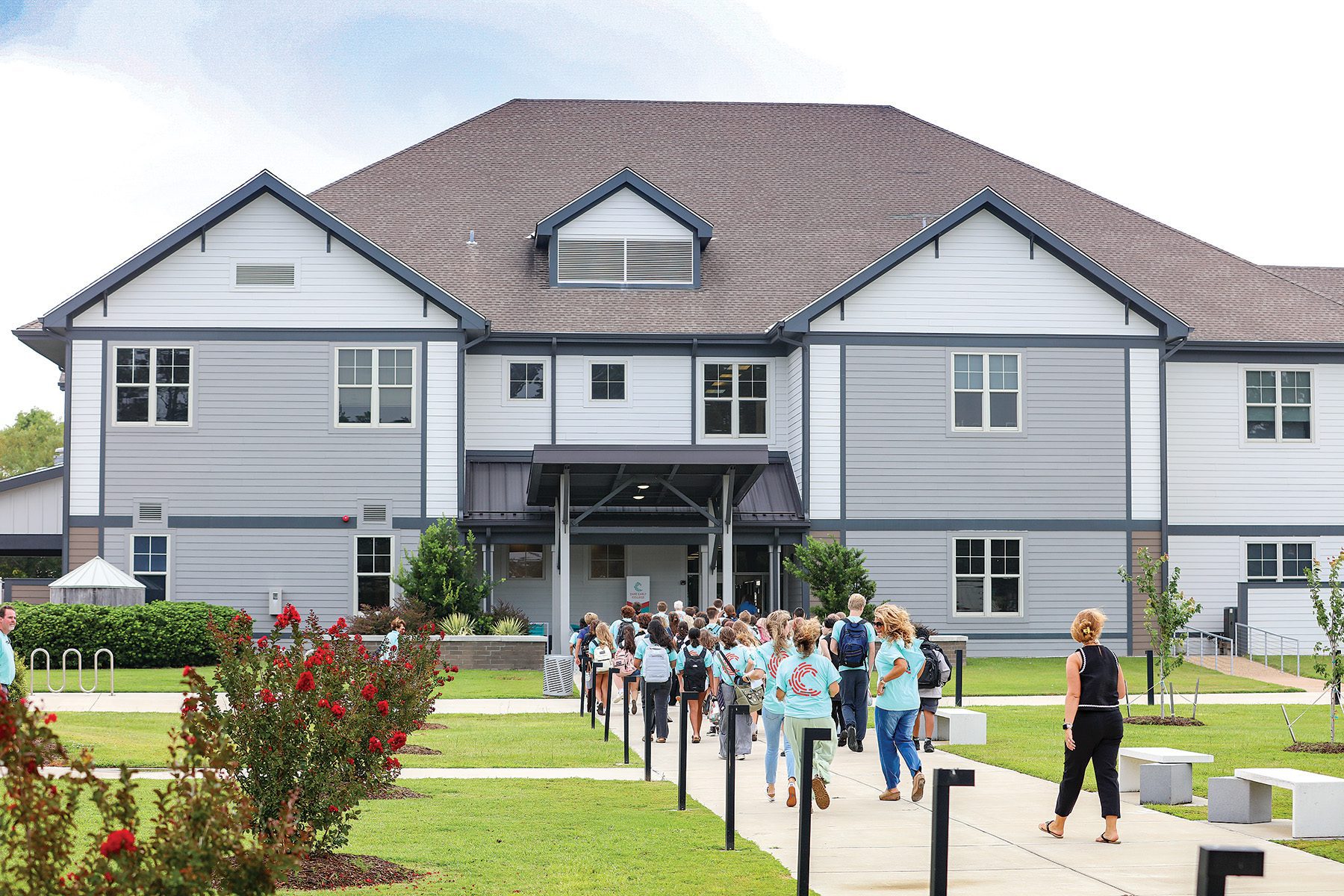
By Ann Wood / Photo above: Students and teachers arrive for their first day of school at the College of the Albemarle, their temporary home as their building is under construction. / Photo courtesy of Dare County Schools.
Dare Early College, whose inaugural class is nearing the end of their freshman year, embraces a new educational model, blending the structure of high school with the opportunity of college, all within a smaller, more personalized environment.
This newest of the four high schools in the county, is open to any rising 9th grader in Dare County, from Duck to Hatteras, and represents a shift in how education is delivered locally, offering students the chance to earn a high school diploma alongside a career certification or associate degree. But beyond the credentials, the program is designed to meet students where they are—academically, socially, and personally—and prepare them for whatever path they choose next.
At its core, the creation of Dare Early College reflects a broader recognition: that a traditional, one-size-fits-all high school model doesn’t serve every student equally well.
Steve Basnight, Superintendent of Dare County Schools, describes the vision as “a purposeful, specific, and targeted pathway that expands opportunity, removes barriers, and ensures every student has access to a rigorous, supportive environment.”
Early Colleges, known in North Carolina as Cooperative Innovative High Schools (CIHS), are designed to do exactly that. While often associated with college-bound students, the model is intentionally flexible—supporting those pursuing higher education, entering the workforce, or exploring career pathways such as technical trades or military service.
For Dare County leaders, the appeal was clear: create an option that broadens access while better aligning with the diverse needs of today’s students.
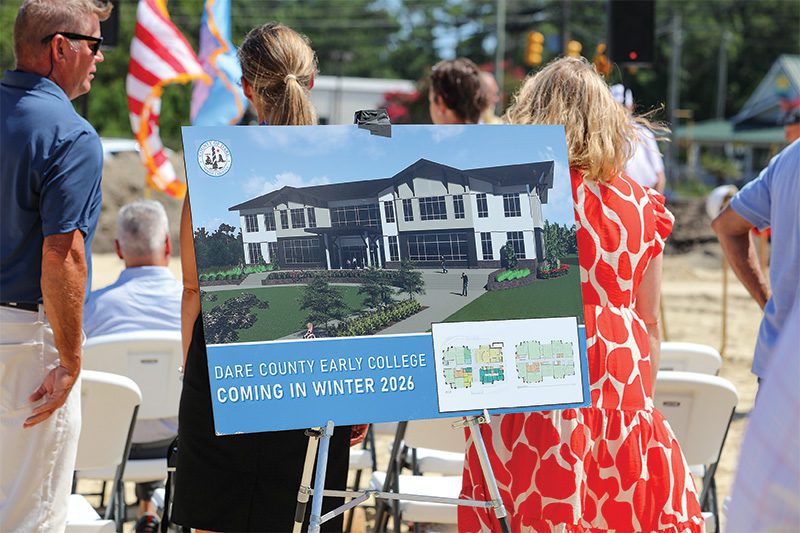
A presentation board displays the rendering of the new Dare County Early College, projected to be complete in the winter of 2026. Photo courtesy of Dare County Schools.
A Shared Investment in the Future
The development of Dare Early College did not happen overnight. According to Dare County Board of Commissioners Chairman Bob Woodard, the concept had been building for years.
“The vision for an Early College in Dare County has been years in the making and was championed from the very beginning by the Dare County Board of Education,” Woodard explains. “They identified this program as a top priority because they understand the power of giving our students a head start.”
That priority was reinforced by a proven track record. Superintendent Steve Basnight notes that the results of the Early College model are well documented. “Year after year, Early Colleges rank among the highest-performing schools in North Carolina,” he says. “Since their introduction across the state in 2004, the model has demonstrated strong outcomes for diverse groups of students.”
That shared vision ultimately led to collaboration between the Board of Education and the Board of Commissioners, culminating in a joint effort to bring the program to life. The investment reflects a long-term commitment—not just to education, but to the future of the community itself.
“Building this Early College reflects our shared commitment to expanding opportunity and investing in the next generation of Dare County,” Woodard adds.
Inside the Early College Model
At Dare Early College, the structure differs significantly from a traditional high school. The program operates within a smaller, more focused setting where every course is delivered at the honors level, and students begin engaging with college coursework early in their academic journey.
Principal Kassie Mount says the inaugural year has centered on building both academic rigor and a strong sense of community.
“From day one, we have prioritized developing shared expectations and a collective sense of purpose so that students, staff, and families feel connected and invested in our work,” she explains.
Already, all ninth-grade students are enrolled in at least one college-level course, gaining not only academic knowledge but also essential skills like time management, communication, and independent learning.
The model is intentionally designed to support students in a variety of ways. Smaller class sizes allow for individualized attention, while a structured environment encourages accountability and growth. Students also have flexibility in how they progress, with the option to extend their timeline if needed while still remaining on track for graduation.
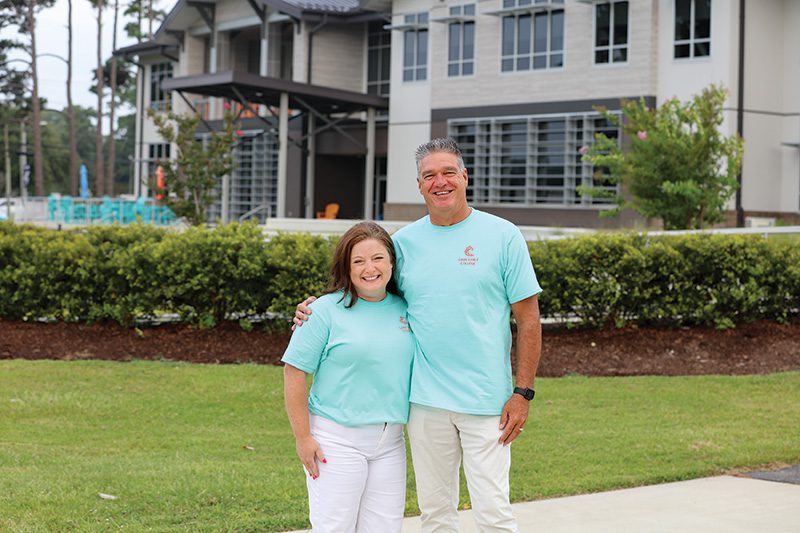
Dare Early College Principal, Kassie Mount and Steve Basnight, Superintendent of Dare County Schools share a proud moment after months of hard work in preparation for the first day of school. Photo courtesy of Dare County Schools.
Who It’s Designed For
One of the most important aspects of the Early College model is its ability to serve a wide range of students—not just those traditionally identified as high achievers.
According to Superintendent Basnight, the program is particularly impactful for students who may benefit from a more personalized environment, including first-generation college students, those who struggle in traditional settings, and those seeking an accelerated academic path.
It also appeals to students who may feel overlooked in larger schools.
“These are often students who might otherwise fly under the radar,” Mr. Basnight says, noting that in an Early College environment, they frequently gain confidence, develop stronger study habits, and become more engaged in their education.
Admission to Dare Early College begins with outreach to families, as eighth-grade students and their parents are invited to attend informational sessions and learn more about the program. From there, interested students complete an application that focuses not on grades, but on intent, motivation, and future goals.
Applicants are asked to write an essay, provide teacher and community references, and participate in an interview where they share why the program is the right fit for them. Together, these elements help shape each incoming class of approximately 75 freshmen.
For Panda Daniels and her son Murdoch Ellis, who was recently accepted into the program’s second-ever class of incoming freshmen, the structure and flexibility were key factors.
“I think the structure of the classes is a little more compatible with the way he learns,” Daniels says, noting Murdoch’s background in a Montessori-style environment. The opportunity to graduate with both a diploma and an associate degree was equally appealing, along with the option to explore different career paths.
Murdoch himself is considering his options. “I thought maybe I could do either welding or engineering,” he says—an example of the kind of flexibility the program is designed to support.
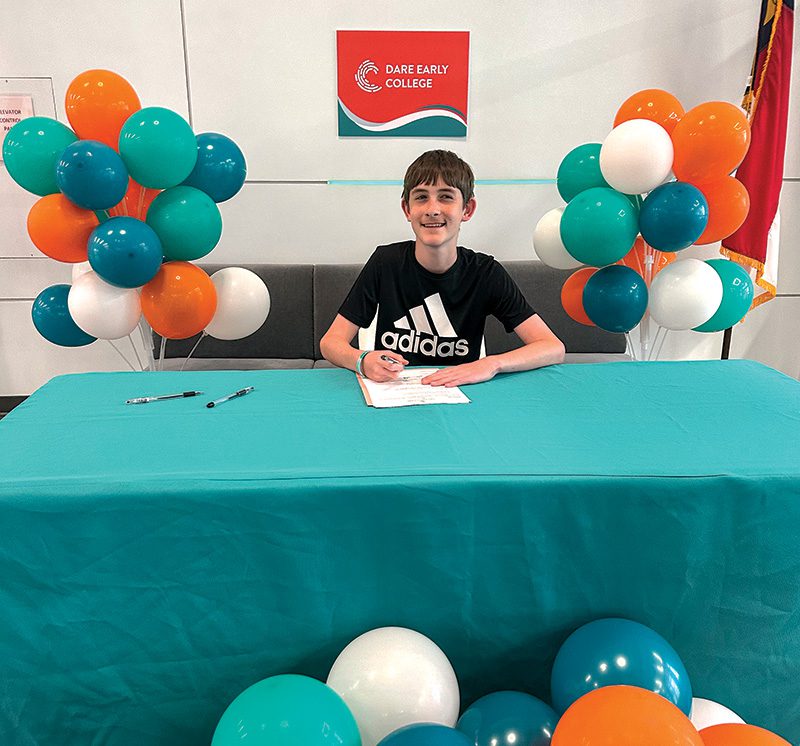
Dylan Wood, graduate of First Flight Middle School, signs his commitment to attend Dare Early College. Photo by Ann Wood.
Early Impact and Student Experience
Though still in its inaugural year, Dare Early College is already showing promising results—not just academically, but in student engagement and overall experience.
For parent Marie Ruggiero, the impact has been immediate and meaningful.
“Dare Early College has been such an amazing experience for him,” she says of her son. “The staff is top notch. They care about the students and their successes so much. Everyone is truly invested.”
She also notes a significant change in her son’s involvement.
“For the first time since preschool, he has gotten involved at school,” Ruggiero says, describing his participation in clubs, volunteer efforts, and peer outreach.
That level of engagement is a key indicator of success for Early Colleges, which emphasize not only academic achievement but also personal development and connection.
Principal Mount echoes that sentiment, describing the school as quickly becoming “a student-driven learning environment where high expectations and strong support go hand in hand.”
Building What Comes Next
As Principal Mount sends acceptance notifications to the incoming freshman class, construction of the school’s permanent facility is visibly underway, while plans continue to develop for its programs.
The permanent facility is projected for completion in November 2026, with students expected to begin using the space in early 2027.
In the meantime, the focus remains on building a strong foundation—academically, culturally, and operationally.
For Dare County, the Early College represents more than a new school. It reflects a broader commitment to innovation, adaptability, and student-centered learning. And as the program continues to evolve, it offers a glimpse into what the future of education might look like—not just locally, but across the state.
In a world where pathways are no longer linear and success takes many forms, Dare Early College is creating space for students to explore, grow, and define their own direction—on their own terms—and on a timeline that works for them.