
Shifting Shorelines
How Best to Protect the Ever-Changing Coastline. Partners for Life: Man, Nature, and Duck Resiliency
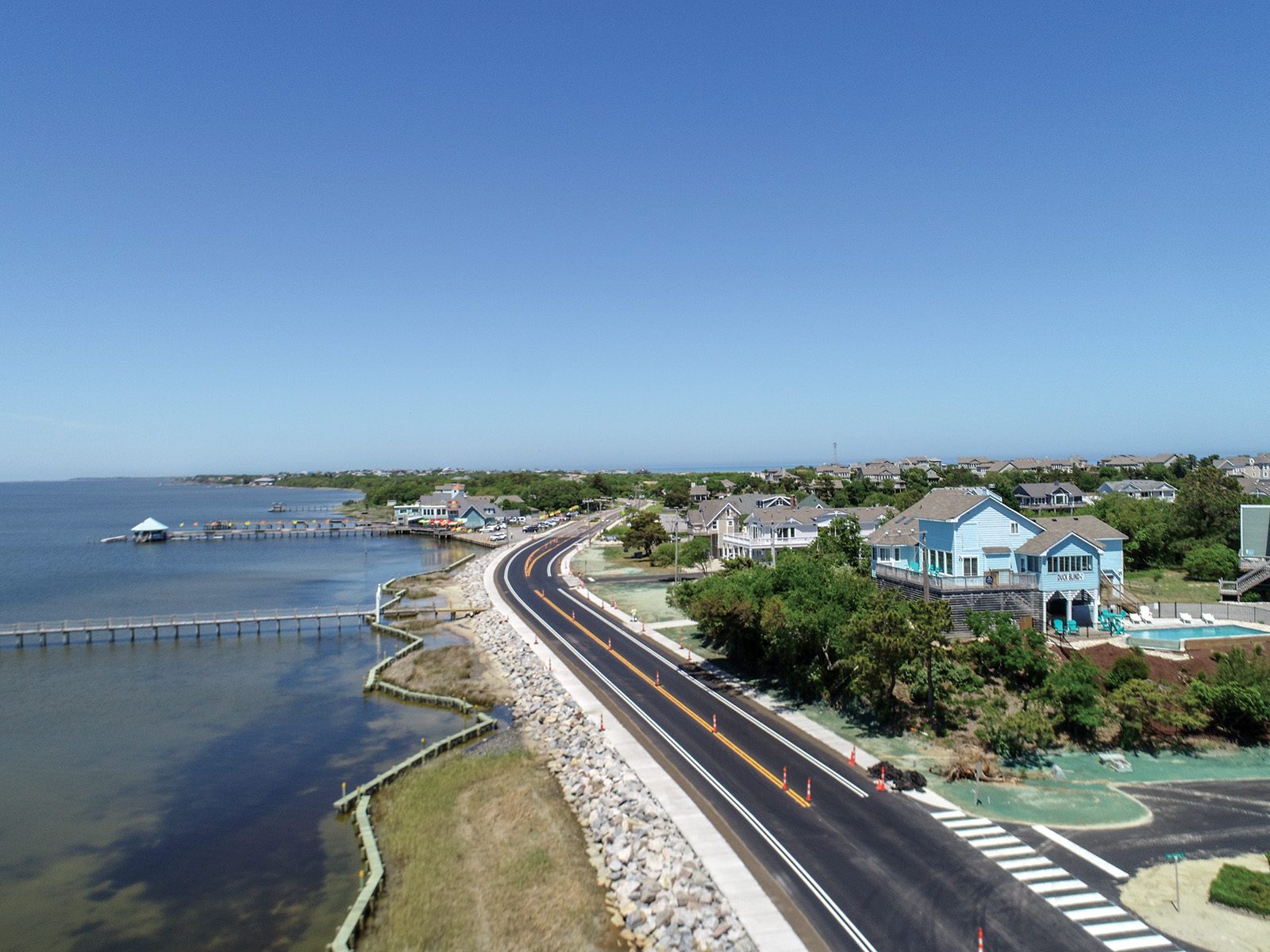
By Betsy DiJulio / Photo above: The impetus for the Town Park Shoreline Stabilization project was two decades of gradual but significant erosion of coastal marsh grasses intensified by hurricanes and tropical storms in 2011, 2016, and 2018. Designed by Vanasse Hangen Brustlin (VHB), construction by D&B Bulkheads began in the fall and wrapped up this spring.
Does Mother Nature always win?

In the Town of Duck, leaders, planners, and residents don’t see it as a competition, but a collaboration and they embrace this balance, with wind and waves in the lead and decision makers responding in kind.
These projects highlight the Town’s agility and resiliency in the never-ending shoreline shuffle. Sandy Cross, Planning and Permits Manager, explained, “The projects are guided by several comprehensive land use, pedestrian, and hazard mitigation plans. These plans prioritize resilient strategies to protect, educate, and buffer against erosion and sea level rise while preserving the coastal character that sustains our tourism-based economy.”
Town Park Shoreline Stabilization
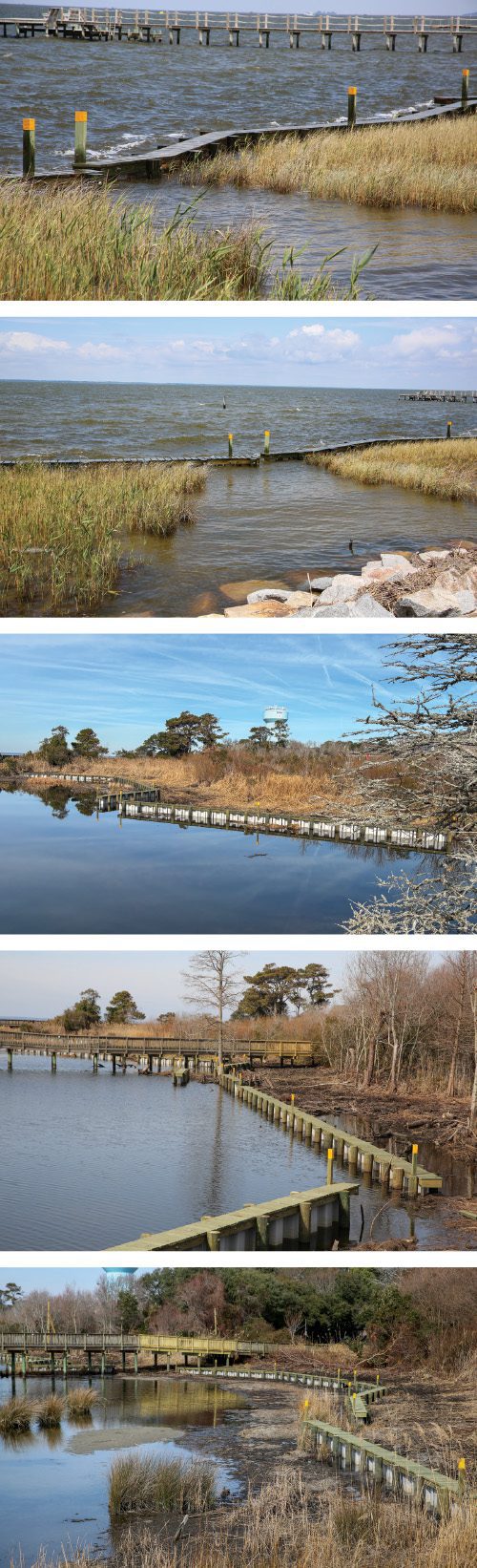
The coastal wetlands along the western shoreline of the 11-acre Duck Town Park/Town Hall property are critical to the protection of millions of dollars of town facilities while also improving water quality and providing wildlife habitat. This project follows decades of gradual erosion intensified by major storms.
With a price tag just north of half a million dollars, the project was funded as part of the town’s FY2025-26 budget. The plan includes near-shore wooden sills and stone revetment to stabilize the shoreline.
Not to be confused with bulkheads, the ten approved sills dissipate the shore-eroding energy of waves while allowing for water and sediment to pass through. Additional improvements to the park, from an expanded pollinator garden to more bald cypress trees, are in progress.
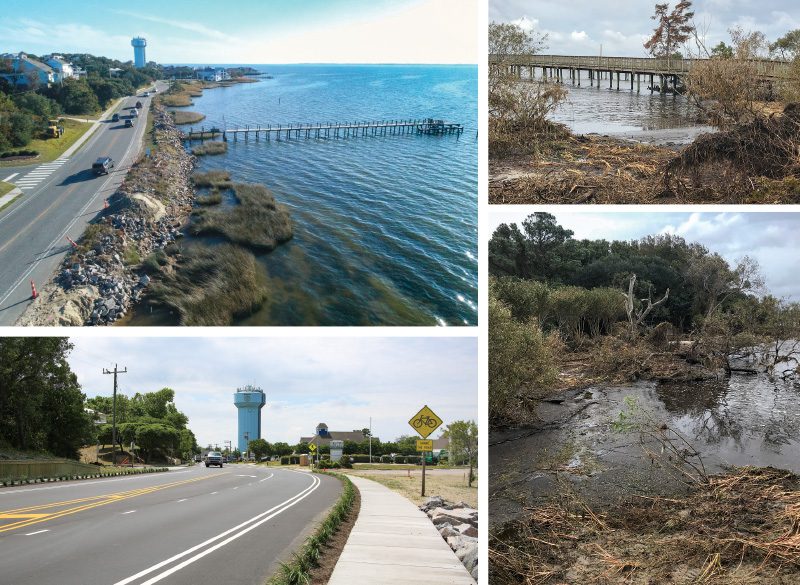
1st Column: In 2021 Duck was one of the first communities chosen to participate in the Resilient Communities Program (RCCP) and takes seriously its role as one of North Carolina’s resilience leaders. An RCCP grant funded the Town’s assessment of existing conditions, setting of coastal resilience goals through a community engagement process, study of resilience strategies and related resources, and identifying and prioritizing projects that would enhance the community’s capacity to manage coastal hazards. 2nd Column: Another RCCP grant facilitated the development of a neighborhood stormwater management study under the direction of a planning/engineering consultant. Five flood-prone basins in Duck became the focus of this study which benefited from significant neighborhood participation in the identification of causes of flooding and potential solutions best matched with each of the areas—Teresa Court was ultimately chosen.
Living Shoreline and Resiliency Project
Duck also marked the completion of the Living Shoreline and Resiliency Project along Duck Road (NC-12 aka Hwy 12) which began in October 2023. The only north-south artery connecting Duck to the northernmost points of the barrier islands, NC-12 serves as a critical route for daily travel and emergency evacuation. Yet, previously, these functions were regularly threatened due to flooding events caused by heavy rain and Currituck Sound storm surge inundation.
From utilizing nature-based solutions to incorporating pedestrian infrastructure to leveraging grant funding, the Town of Duck Living Shoreline and Resiliency project proves that meeting climate challenges requires innovative, comprehensive approaches. This project imparts the importance of exploring varied strategies to safeguard infrastructure and foster sustainable communities—blending seamlessly this knowledge and innovation with local understanding and community interest.
Central to this project was elevating a 1,500-foot stretch of Hwy 12 and improving stormwater management at the north end of the Village from Cook Drive to Barrier Island Station. Hand-in-hand with these strategies was the addition of a bicycle/pedestrian connection and shoreline protection through native marsh restoration.
Additionally, Duck Village now includes sidewalks on both sides of NC-12 and widened shoulders for bike lanes.
Funded through a combination of local, state, and federal partnerships, the $4.4 million project reflects Duck’s commitment to long-term resilience.
Teresa Court Stormwater Improvements
At the neighborhood level, projects like planned stormwater improvements at Teresa Court aim to reduce flooding and increase water storage capacity. These smaller-scale efforts reflect Duck’s broader strategy of combining engineered and nature-based solutions to manage coastal challenges.
Septic Health Initiative 2026
This collaborative and regional water quality initiative falls under Duck’s Comprehensive Land Use Plan (adopted in 2020) with the goal of balancing natural resource protection with economic growth and public health and safety while maintaining, protecting, and enhancing water quality. Objectives include water conservation, maintenance of septic tanks and drain fields, enhanced monitoring, and water quality protection.
As sea levels rise, there is an impact on septic systems. Funded by a $5000 grant from Outer Banks Association of Realtors in November of 2025 and currently with three vendors on board, the project will specifically fund approximately 30 voluntary conventional septic inspections at $150 each. These inspections will take place in the spring and fall of this year to avoid summer tourism season with a report provided to homeowners and to the Town for baseline data. As Mayor Monica Thibodeau quipped at the conclusion of Cross’s presentation at the February 24 Town Council annual retreat, “It’s a Royal Flush.”
Cross underscores the importance of community support in the successful implementation of this kind of work sharing that “I often say it takes a village and there is no truer statement as evidenced by these projects and the Duck community that supports the vision of resiliency and trusts the Duck Town Council and staff to make these projects a reality. Together, we can ensure a stronger, more resilient future for generations to come.”
For more information, contact Sandy Cross at scross@ducknc.gov or visit www.ducknc.gov for additional details, video and podcast links, and to sign up for Duck’s weekly eNewsletter.

Author: Betsy DiJulio