
Filtering Hope
Each night, four local Outer Banks kidney patients connect themselves to life-preserving peritoneal dialysis machines. Every morning, they wake up determined to make the most of another day.
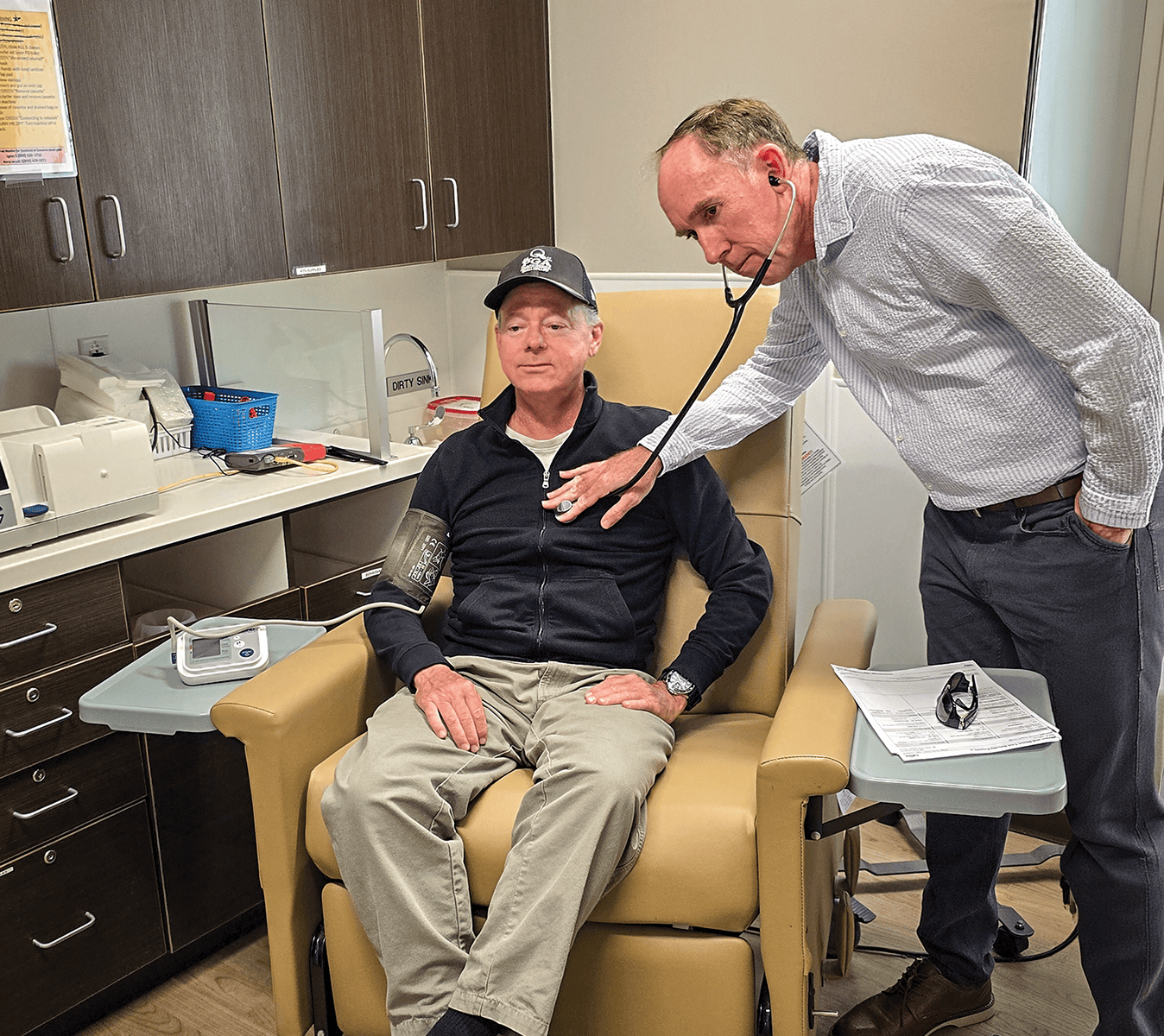
By Betsy DiJulio / Photo above: Dialysis patients like Outer Banks Coastal Life editor Jeff Donohue (pictured with nephrologist Dr. Greg Warren) often dedicate entire closets to storing life-sustaining supplies.
Floss and brush teeth, wash face, apply skincare products, and make one last trip to the bathroom. We have all had some version of this bedtime ritual since childhood.

But what if bedtime in mid- to later life had to be delayed while you complete at least ten more tasks—gather supplies, wash hands, put on a surgical mast, clean the workspace, insert a sterile plastic cassette into a “cycler,” connect tubing to fluid bags and a drain, power on a machine, confirm prescription settings, prepare a catheter, and “link up”—and not doing so would kill you?
According to OBX residents from Corolla to Ocracoke, ages 45 to 81, you would do it. And you would be grateful.
Recently, five of our island neighbors, including Jeff Donohue, the editor of this magazine, sat down to share their experiences as people living nearly normal lives with kidney disease, peritoneal dialysis and, in one case, a transplant.
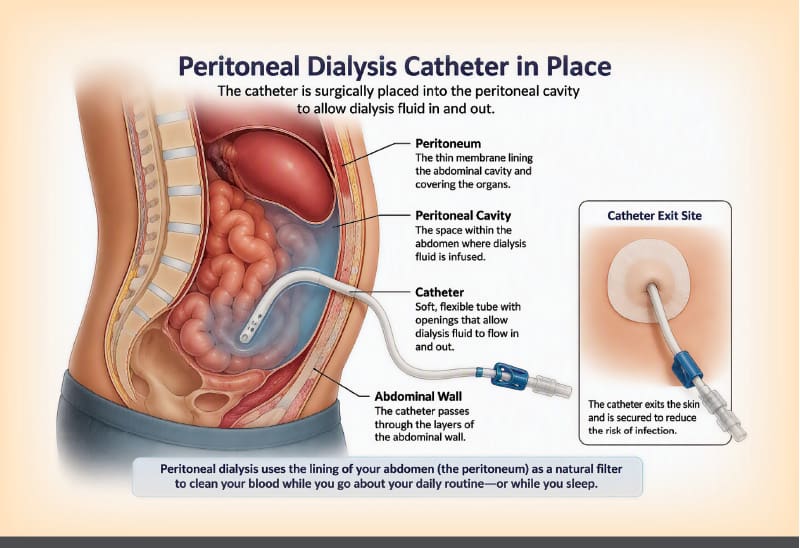
For the uninitiated lay person, there are two main types of dialysis: hemodialysis, usually administered three times each week for two to three hours at a clinic, and peritoneal, sometimes referred to as “home dialysis.” The former filters your blood outside your body; the latter inside your abdomen while you sleep. The name comes from the peritoneal cavity, a fluid-filled space inside the abdomen located between the lining of the body wall and the internal organs.
Their stories are sobering but uplifting. To a person, they are upbeat, with praise for their local care teams, typically consisting of a nephrologist, cardiologist, nurse, nutritionist, and social worker. They are also generous in the sharing of personal journeys that some might consider too private in the hopes of educating and reassuring others.
Jeff Donohue (photo above)
60 years old | Kill Devil Hills
Jeff Donohue recounts a diagnosis of end stage kidney disease “out of nowhere” in April 2025. But he had been experiencing severe fatigue, swollen ankles, and cramping in his legs and hands.
Though he had been treated for high blood pressure for eight years, he had not seen a primary care physician (PCP) for 10, so he had not had regular bloodwork done in a decade. And he was unaware of the strong connection between high blood pressure and kidney disease. When he did sign on with a newly obtained PCP Jennifer Harrison of Croatan Family Medicine, who ordered bloodwork, doctor’s orders were essentially, “Go to the hospital. Now.”
Donohue’s message for everyone is simple: submit to annual bloodwork that covers kidney function and cook at home. He regrets not avoiding excess sodium and sugar typically found in restaurant food. Nowadays, he strives to avoid both, along with fast food and phosphorous, noting that most packaged foods contain some version of a phosphate.
For those who have recently learned they must start dialysis, his advice is similarly straightforward: do the research, understand your options, and lean toward peritoneal dialysis, as it impacts lifestyle less and affords better overall health. As one nephrologist once told him, “You get one good day per week on hemodialysis.”
In addition to the routine referenced above, Donohue’s includes taking his blood pressure and weighing himself to determine which strength solution to use. If you don’t follow the process correctly, you must start over. He found it frightening at first because “Peritonitis—an infection in the peritoneum—can kill you.” And though he finds going to bed early challenging, along with being tied to his bed for 8 hours—it can abbreviate your fun—the threat of dying puts things in perspective.
Donohue admits to being “crushed” when he first learned of his diagnosis. But after the initial shock, his response was equal parts philosophy and pragmatics: “You are dealt the cards, and you deal with it…I’ve got this.” And he does. “I’m more focused than I’ve ever been in my life…I see more than I used to see…and I’m more patient with people.” What formerly filled him with rage, now evokes a step back and an, “Okay, no problem.”
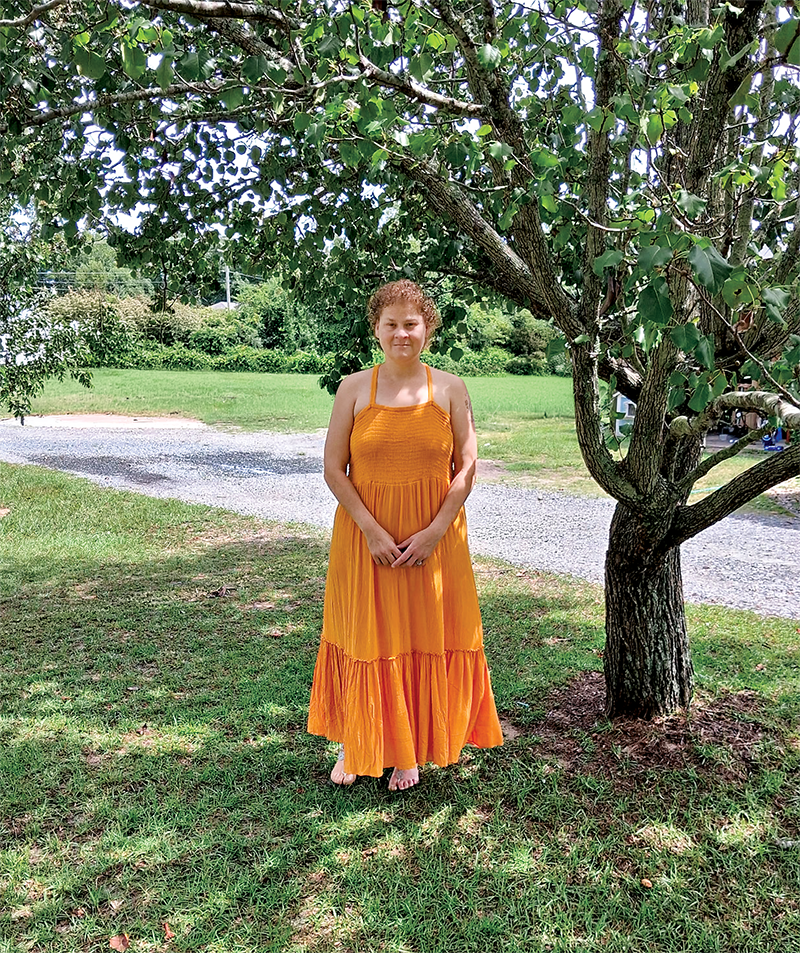
Dionne Glover
Dionne Glover
45 years old | Harbinger
In December 2020 when Dionne Glover was only 39, she was diagnosed with diabetes-related stage 3 to 4 kidney disease. She recalls being “tired all the time with no energy whatsoever,” in addition to retaining fluid. But her then roommate, now husband, noticed one night that she was “white as a ghost” with a swollen leg. A trip to the ER in the Outer Banks led to a hospital stay in Elizabeth City.
Glover describes her kidneys as “kaput.” She started with peritoneal dialysis until she experienced calciphylaxis (calcific uremic arteriolopathy). This rare, potentially fatal condition is most common in people with end stage kidney disease or who are on dialysis. She describes it as her muscle and tissue “turning to bone.” According to the National Library of Medicine, “Calciphylaxis typically results from calcification of the medial layer of arterioles and small arteries” with the resulting impact on blood flow leading to tissue ischemia, necrosis, and ulceration.
Glover then started hemodialysis until this past May when she received a kidney transplant. While she doesn’t know who the donor is—it is up to that person to reach out to her—she is “beyond grateful.” She reports that she is progressing exceptionally well, thanks to a “great team” and the support of her spouse.
Though she is still diabetic, Glover takes half the insulin needed previously along with anti-rejection medications, a tapering dose of prednisone, and an antibiotic for another year. Always tired after dialysis, she can now frequently be heard saying, “Okay, honey, let’s go!”
If a transplant is a possibility, she recommends joining as many networks as you can—she joined three—and creating a nest egg to cover travel experiences. Other than that, “Just keep an open mind” while keeping in close touch with your care team: write questions and symptoms and share with nurses. Says Glover, “The only dumb question is the one you didn’t ask.”

Jimmy Jackson
Jimmy Jackson
80 years old | Ocracoke
After watching his kidney levels for several years, Jimmy, who has had diabetes since early adulthood, began peritoneal dialysis in January 2026. His bloodwork changed dramatically between December 16 and December 30, landing him in the hospital on New Year’s Day where he remained for over a week.
After three weeks of hemodialysis, Jackson switched to peritoneal. Calling it a “team effort,” he credits his wife Linda and his care team with smooth sailing for the last four to five months, feeling better than he has in two years: “I can do about anything I want to do.” But he also avoids salt, drinks 64 ounces of fluid each day, and keeps his weight down. As a result, he no longer needs medication to control his diabetes.
Like others, the Jacksons have devoted spare space in their home for some 30 boxes of supplies that are delivered each month. Living on a low-lying barrier island that juts out into the Atlantic, Jimmy and Linda are very aware of storms that could knock out power and wash-out roads. “We are trying to keep ahead of it in case a hurricane comes,” he says. While peritoneal dialysis can be performed manually, they do own a generator. Even given a potential curve ball from Mother Nature, says Jackson, “I don’t see how it could be any better.”
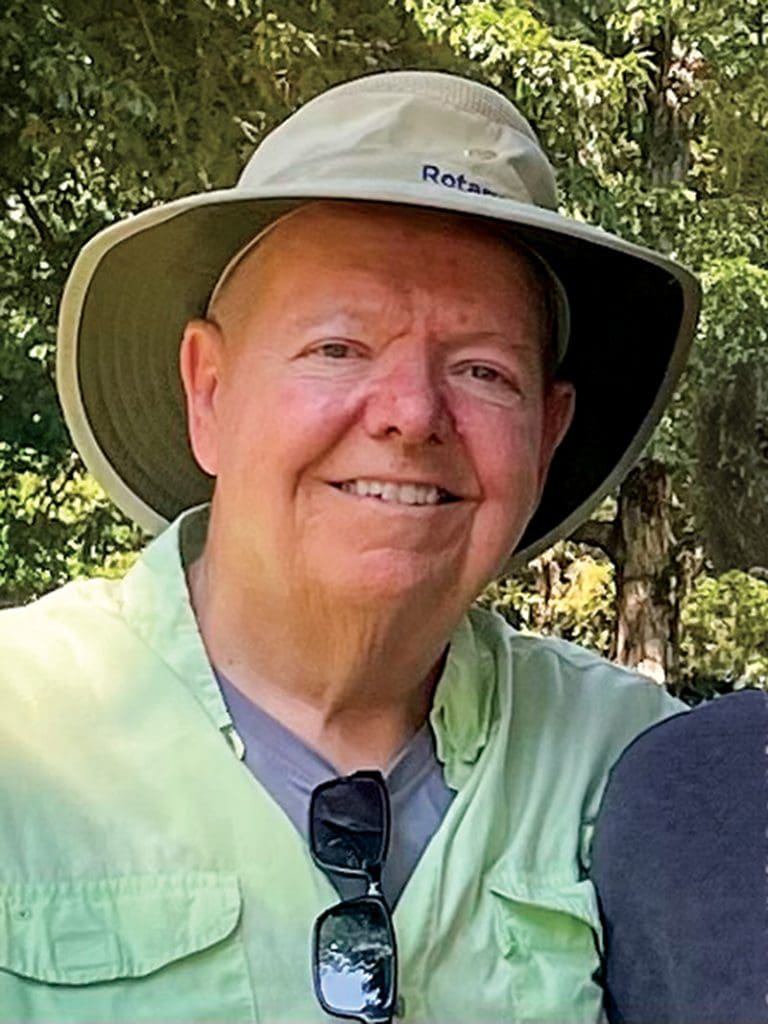
Stan Keeler
Stan Keeler
78 years old | Kitty Hawk
Stan Keeler’s kidneys have been on his and his doctor’s radar since bypass surgery in 2006. Despite medication, his GFR (glomerular filtration rate) levels, which measure how well your kidneys filter waste and extra fluid from your blood, had been dropping and, around 2023, his nephrologist began preparing him for what was coming. In early 2025, congestive heart failure necessitated the need to begin dialysis. Thanks to his doctor, “It wasn’t a big shock,” he says.
Keeler feels that he is too old for a transplant, saying he wouldn’t want to take a kidney from a younger person. So, he chose peritoneal dialysis because it can be done at home, is not nearly as draining on his energy levels, and allows him to travel.
At this point, the nighttime ritual has become second nature, though he says he leans on his wife, Patsy, who “sets me straight.” For him, there is only one downside: “I am locked into it; if I don’t have it, I die.” While he admits that this realization can be depressing, “All I have to do is think about other options,” he says, “and this seems really good.”
His reliance on medication has decreased and on vitamins has increased. He consciously consumes more fluid than before, mostly water, but struggles to get enough protein—110 grams per day—without gaining weight. Protein drinks help.
His advice to those who find themselves in a similar situation is to take your medication and follow doctor’s orders. But if you aren’t satisfied, get a second opinion, as “Doctors are practicing.”
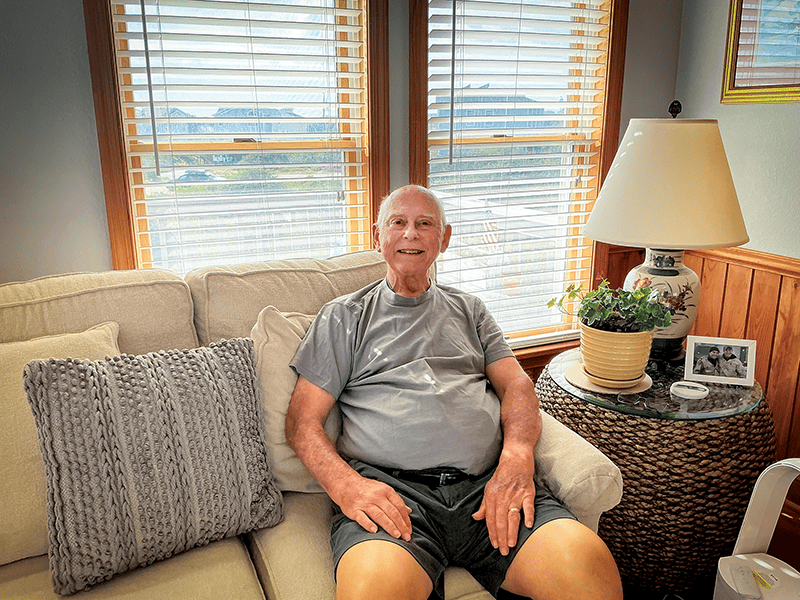
Richard Neuman
Richard Neuman
81 years old | Corolla
Richard Neuman, who served 22 years in the military plus 15 as a civilian in special ops, learned some 40 years ago that he had only one kidney. Over the years, that kidney started to work less effectively and five years ago, he was diagnosed with kidney disease. His notable symptom was swelling in his legs.
But in December 2025, he went to Alabama to visit his children, contracted pneumonia, and was admitted to the hospital. The cardiologist gave him a drug that had an adverse effect on his kidney and required four days of hemodialysis. Back home, Neuman continued receiving hemodialysis three days each week from January to May when he started on peritoneal dialysis.
“It’s a lot of work,” he says, “Thank god, I’ve got my wife (Mary Lou).” And he has the highest praise for his clinic care team where he goes monthly for blood and urine tests. “They are the nicest people in the world” he asserts, noting that their professionalism, patience, and personal touch make them feel almost like family.
Neuman wants others to know that “Everything has effect on your heart” and that “Salt is a killer; sugar too.” He has found the free mobile app, Yuka, indispensable, as it scans barcodes to instantly evaluate the health impact of packaged foods. In addition to minding his nutrition, he exercises regularly by swimming in his pool, riding a stationary bike, weightlifting, and walking in cooler weather. “You have to stay active or you’re not going to make it.”
Upon waking, the bedtime ritual for peritoneal dialysis patients reverses. As each one untethers themself from their lifeline, the focus shifts from staying alive to living.